

Made vs. Self-Made
On Imitation, Social Approval, and the Strange Loneliness of Being Early

There is something I have quietly observed for years that I think people are too uncomfortable to say out loud.
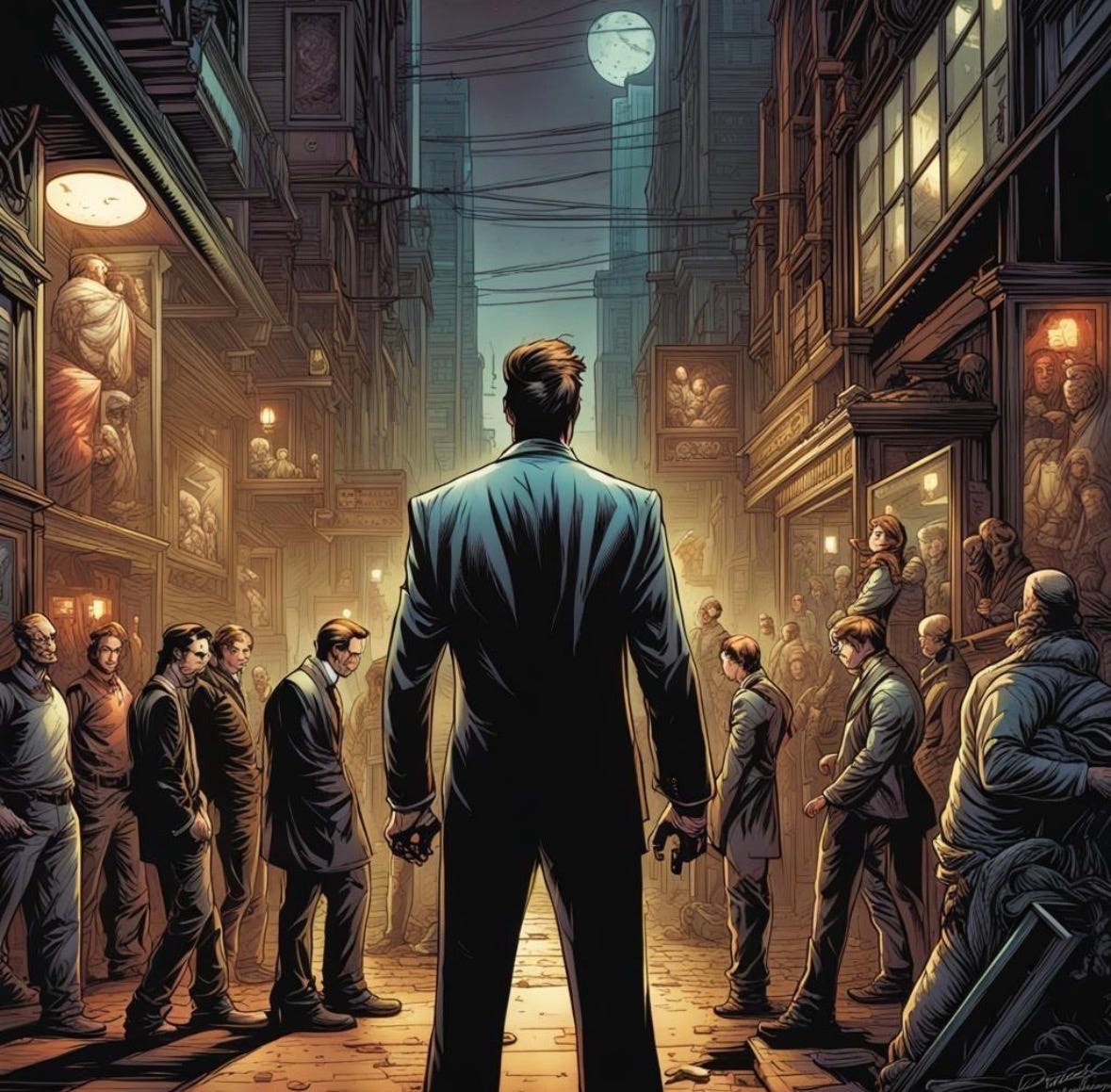
Society claims to admire authenticity, originality, individuality, and “being yourself.” But in reality, truly authentic people are often rejected long before they are understood
First, they are mocked.
They are called weird. Too much. Attention-seeking. Dramatic. Different. Intense. Performative.
Then culture catches up.
Suddenly, the same behaviors, aesthetics, mannerisms, speech patterns, creative choices, or lifestyles that once made someone an outsider become socially profitable.
What was once embarrassing becomes aspirational. What was once mocked becomes a trend. And almost overnight, people begin performing the very thing they once criticized.
I noticed this long before social media became what it is today.
Back when Snapchat first appeared, I remember constantly being told to “put the phone down.” People rolled their eyes at me for snapping, recording clips, speaking naturally to a camera, or treating ordinary moments as though they mattered creatively.
A year later, everyone was doing it.
The same thing happened with the way I spoke. I grew up being made fun of for my accent, mannerisms, and cadence. I was called “Oreo” by people who looked like me because, apparently, the way I naturally spoke sounded too polished, too suburban, or too “Valley girl.”
Years later, many of those same people developed carefully practiced versions of the very accent they once mocked.
That pattern stayed with me.
Over time, I realized something uncomfortable:
People often reject authenticity when it appears naturally, but embrace it once it becomes socially validated.
Authentic people often unintentionally confront others — not because they are inherently better, but because visible self-connection can feel unsettling in environments shaped heavily by imitation, social reward, and performance.
Some people become themselves slowly.
Others study what gets rewarded in someone else and build identities around reproducing it.
That distinction matters.
Especially online.
The internet has made it increasingly difficult to distinguish genuine self-construction from carefully assembled identity performance.
And to be clear, evolution is normal. Human beings influence each other constantly. We all borrow language, aesthetics, inspiration, and ideas from the world around us.
That is not what I am talking about.
I am talking about people who once dismissed certain ambitions, disciplines, interests, or creative pursuits as embarrassing, excessive, unrealistic, or unnecessary — only to adopt those same identities once they became profitable, admired, or socially rewarding.
There is a difference between inspiration and replication.
There is also a difference between being self-made and being made.
Some people build while comfortable.
Others build while destabilized.
Some people have invisible infrastructure behind them: financial support, emotional safety nets, family assistance, social familiarity, strategic help, stability, or environments that allow them the luxury of becoming.
Others build while emotionally exhausted, unsupported, grieving, financially unstable, or rebuilding privately.
Those are not the same conditions, no matter how similarly the final product is presented online.
Maybe that is why authentic individuals are often isolated at first.
This also reminds me of a phrase that has become increasingly popular in recent years: “No one is truly self-made.”
And to some extent, that is true.
Human beings influence each other. Support systems matter.
But support is not distributed equally.
Originality disrupts people.
It forces people to confront how much of social life is imitation, adaptation, performance, and approval-seeking. It exposes how uncomfortable many people are with standing out before the crowd gives permission.
Which is why society often prefers the watered-down replica of authenticity over the real thing.
The real thing confronts too deeply.
The replica is easier to digest.
Cleaner. Safer. Less threatening.
But no matter how much originality is mimicked and reframed as “inspiration,” people who move through the world from a genuine internal identity can usually recognize the difference immediately.
One comes from internal instinct.
The other depends on external validation and reference.
Perhaps that is why the internet has felt increasingly repetitive in recent years.
Replication can imitate aesthetics, language, behavior, and even identity — but eventually, something begins to flatten.
The problem with imitation is that eventually, it reaches the edge of what was copied.
You said SO MUCH here!
You used the word "perform" and that resonated loudly for me. I'm 38 years old and I have tried so many times to break free of my 9-5. I've done blogging, affiliate marketing, content creation, I've designed courses and Etsy printables... I've tried it all and HATED it all because it felt so fake and inauthentic.
I'm still in my 9-5, I'm still trying to find my place, but I've learned that I have to show up as me no matter what I'm doing. Anything else feels like another prison.